Buy zähne.eu ?
We are moving the project
zähne.eu .
Are you interested in purchasing the domain
zähne.eu ?
domain@kv-gmbh.de · 0541-91531010
Buy zähne.eu ?
What are conjunctional clauses, relative clauses, demonstrative clauses, and infinitive clauses?
Conjunctional clauses are dependent clauses that are introduced by a conjunction, such as "because," "although," or "while." They provide additional information about the main clause in a sentence. Relative clauses are also dependent clauses that provide more information about a noun in the main clause. They are introduced by relative pronouns like "who," "which," or "that." Demonstrative clauses are dependent clauses that function as adjectives and provide more information about a noun in the main clause. They are introduced by demonstrative pronouns like "this," "that," "these," or "those." Infinitive clauses are dependent clauses that are formed with an infinitive verb (to + base form of the verb). They can function as nouns, adjectives, or adverbs in a sentence. **
Are conjunctive clauses always adverbial clauses?
No, conjunctive clauses are not always adverbial clauses. While adverbial clauses are a type of conjunctive clause that function as adverbs to modify verbs, adjectives, or other adverbs, there are also other types of conjunctive clauses. For example, there are conjunctive clauses that function as noun clauses, such as in "I know that you are busy." In this sentence, "that you are busy" is a conjunctive clause functioning as a noun clause, not an adverbial clause. Therefore, conjunctive clauses can serve various grammatical functions beyond just adverbial clauses. **


Similar search terms for Clauses
Top-Angebote
Products related to Clauses:
-
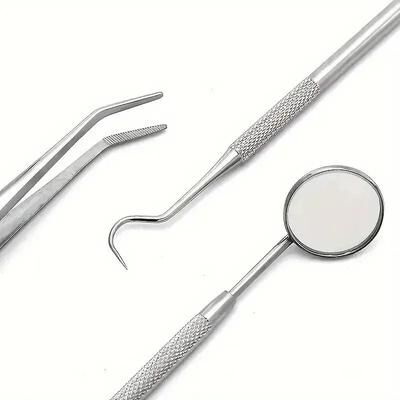
Uplifted Finds Stainless Steel Dentist Oral Care Kit Stainless Steel Dentist Oral Care KitMaintain professionallevel dental hygiene at home with this 6piece Stainless Steel Dentist Oral Tools set. Designed for comprehensive cleaning and flossing, these tools are highly effective for tartar removal and plaque control. The highquality...54,97 $*Shipping: 0,00 $Secure redirect to the provider
-
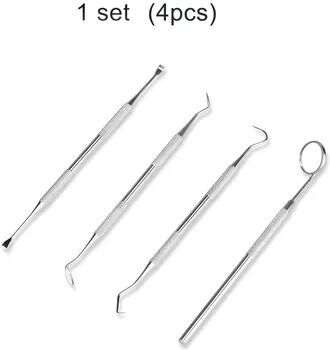
Inspire Daily Merch Teeth Cleaning Tool Dental Plaque Remover Tartar Scraper Scaler Oral Care Dentist Dental Hygiene Kit Calculus Remover 1setProfessional Teeth Cleaning at Home Achieve a dentistlike clean with this 4pcs Tartar Scraper Scaler Plaque Remover kit. Specifically designed for effective athome teeth cleaning, this set helps you remove tartar, plaque, and calculus with...29,97 $*Shipping: 0,00 $Secure redirect to the provider
-
Unicskin Unicwhite Smile Gel Teeth Whitening 16x2mLA skin-care product. Achieve a brighter smile with Unicwhite Smile Gel —safe, peroxide-free whitening with fast, visible results. Effectively removes stains from coffee, wine, and tobacco. Peroxide-free formula with no enamel damage. No sensitivity, safe for regular use. Fast results with blue light activation.29,88 £*Shipping: 5,22 £Secure redirect to the provider
-
Inspired Deals Comfort Fit Flex Silicone Veneers For Instant Smile Whitening Comfort Fit Flex Silicone Veneers For Instant Smile WhiteningTransform your smile in seconds with these temporary veneers designed to create a brighter, more confident look without complicated dental procedures. Made from soft silicone, these flexible snapon teeth covers fit comfortably over your upper teeth...34,97 $*Shipping: 0,00 $Secure redirect to the provider


-
What are relative clauses and conjunctional clauses?
Relative clauses are clauses that provide additional information about a noun in the main clause. They are introduced by relative pronouns such as "who," "which," "that," and "whom." For example, in the sentence "The book that I read is very interesting," the relative clause "that I read" provides more information about the noun "book." Conjunctional clauses, on the other hand, are clauses that are connected to the main clause by conjunctions such as "and," "but," "or," "if," and "because." They can express relationships such as addition, contrast, alternative, condition, and cause. For example, in the sentence "I will go to the park if the weather is nice," the conjunctional clause "if the weather is nice" expresses a condition for the action in the main clause. **
-
What are the French conditional clauses (si-clauses)?
French conditional clauses, also known as si-clauses, are used to express a hypothetical situation and its potential outcome. They consist of two parts: the si clause (if clause), which describes the condition, and the main clause, which describes the potential result. The si clause is typically formed using the conjunction "si" followed by the imperfect tense or the pluperfect tense, while the main clause is formed using the conditional tense. These clauses are commonly used to talk about what would happen in certain situations if a specific condition were met. **
-
How can subordinate clauses be rewritten as main clauses?
Subordinate clauses can be rewritten as main clauses by removing the subordinating conjunction and making any necessary adjustments to the verb tense or word order. For example, the subordinate clause "because she was tired" can be rewritten as the main clause "she was tired." This transformation allows the subordinate clause to stand alone as a complete sentence. Additionally, any pronouns or other words that were dependent on the subordinating conjunction may need to be adjusted to ensure the new main clause is grammatically correct. **
-
How can one recognize main clauses and subordinate clauses?
Main clauses can stand alone as complete sentences, while subordinate clauses cannot. Subordinate clauses often begin with subordinating conjunctions such as "although," "because," "if," "when," or "while." They also often contain a subject and a verb, but they do not express a complete thought on their own. Main clauses, on the other hand, express a complete thought and can function as independent sentences. By identifying these characteristics, one can recognize main and subordinate clauses in a sentence. **


How can adverbial clauses be used as subordinate clauses?
Adverbial clauses can be used as subordinate clauses to provide additional information about the main clause. They can modify the verb in the main clause by expressing time, place, manner, condition, reason, purpose, or concession. For example, in the sentence "She went to bed after she finished her homework," the adverbial clause "after she finished her homework" provides information about the timing of the main action "She went to bed." Adverbial clauses are introduced by subordinating conjunctions such as after, before, while, since, because, if, although, etc. **
How can main clauses and subordinate clauses be recognized?
Main clauses can be recognized by their ability to stand alone as complete sentences, containing a subject and a predicate. Subordinate clauses, on the other hand, cannot stand alone as complete sentences and are dependent on the main clause for their meaning. They often begin with subordinating conjunctions such as "because," "although," "while," or "if." Additionally, subordinate clauses often function as adverbial, adjectival, or nominal clauses, providing additional information about the main clause. **
Top-Angebote
Products related to Clauses:
-
Enesco/Dept 56 More Letters for the Clauses Clothtique Red , RedEvery year, Mr. and Mrs. Claus are eager to receive and read More Letters for the Clauses. The red mailbox has holiday accents including holly leaves, red berries, and a red bow; it is filled with wrapped packages and rolled-up letters. This happy...149,99 $*Shipping: 20,95 $Secure redirect to the provider
-
Enesco/Dept 56 More Letters for the Clauses African American Clothtique Red , RedEvery year, Mr. and Mrs. Claus are eager to receive and read More Letters for the Clauses. The red mailbox has holiday accents including holly leaves, red berries, and a red bow; it is filled with wrapped packages and rolled-up letters. This happy,...149,99 $*Shipping: 20,95 $Secure redirect to the provider
-
Uplifted Finds Stainless Steel Dentist Oral Care Kit Stainless Steel Dentist Oral Care KitMaintain professionallevel dental hygiene at home with this 6piece Stainless Steel Dentist Oral Tools set. Designed for comprehensive cleaning and flossing, these tools are highly effective for tartar removal and plaque control. The highquality...54,97 $*Shipping: 0,00 $Secure redirect to the provider
-
Inspire Daily Merch Teeth Cleaning Tool Dental Plaque Remover Tartar Scraper Scaler Oral Care Dentist Dental Hygiene Kit Calculus Remover 1setProfessional Teeth Cleaning at Home Achieve a dentistlike clean with this 4pcs Tartar Scraper Scaler Plaque Remover kit. Specifically designed for effective athome teeth cleaning, this set helps you remove tartar, plaque, and calculus with...29,97 $*Shipping: 0,00 $Secure redirect to the provider
-
What are conjunctional clauses, relative clauses, demonstrative clauses, and infinitive clauses?
Conjunctional clauses are dependent clauses that are introduced by a conjunction, such as "because," "although," or "while." They provide additional information about the main clause in a sentence. Relative clauses are also dependent clauses that provide more information about a noun in the main clause. They are introduced by relative pronouns like "who," "which," or "that." Demonstrative clauses are dependent clauses that function as adjectives and provide more information about a noun in the main clause. They are introduced by demonstrative pronouns like "this," "that," "these," or "those." Infinitive clauses are dependent clauses that are formed with an infinitive verb (to + base form of the verb). They can function as nouns, adjectives, or adverbs in a sentence. **
-
Are conjunctive clauses always adverbial clauses?
No, conjunctive clauses are not always adverbial clauses. While adverbial clauses are a type of conjunctive clause that function as adverbs to modify verbs, adjectives, or other adverbs, there are also other types of conjunctive clauses. For example, there are conjunctive clauses that function as noun clauses, such as in "I know that you are busy." In this sentence, "that you are busy" is a conjunctive clause functioning as a noun clause, not an adverbial clause. Therefore, conjunctive clauses can serve various grammatical functions beyond just adverbial clauses. **
-
What are relative clauses and conjunctional clauses?
Relative clauses are clauses that provide additional information about a noun in the main clause. They are introduced by relative pronouns such as "who," "which," "that," and "whom." For example, in the sentence "The book that I read is very interesting," the relative clause "that I read" provides more information about the noun "book." Conjunctional clauses, on the other hand, are clauses that are connected to the main clause by conjunctions such as "and," "but," "or," "if," and "because." They can express relationships such as addition, contrast, alternative, condition, and cause. For example, in the sentence "I will go to the park if the weather is nice," the conjunctional clause "if the weather is nice" expresses a condition for the action in the main clause. **
-
What are the French conditional clauses (si-clauses)?
French conditional clauses, also known as si-clauses, are used to express a hypothetical situation and its potential outcome. They consist of two parts: the si clause (if clause), which describes the condition, and the main clause, which describes the potential result. The si clause is typically formed using the conjunction "si" followed by the imperfect tense or the pluperfect tense, while the main clause is formed using the conditional tense. These clauses are commonly used to talk about what would happen in certain situations if a specific condition were met. **
Similar search terms for Clauses
-
Unicskin Unicwhite Smile Gel Teeth Whitening 16x2mLA skin-care product. Achieve a brighter smile with Unicwhite Smile Gel —safe, peroxide-free whitening with fast, visible results. Effectively removes stains from coffee, wine, and tobacco. Peroxide-free formula with no enamel damage. No sensitivity, safe for regular use. Fast results with blue light activation.29,88 £*Shipping: 5,22 £Secure redirect to the provider
-
Inspired Deals Comfort Fit Flex Silicone Veneers For Instant Smile Whitening Comfort Fit Flex Silicone Veneers For Instant Smile WhiteningTransform your smile in seconds with these temporary veneers designed to create a brighter, more confident look without complicated dental procedures. Made from soft silicone, these flexible snapon teeth covers fit comfortably over your upper teeth...34,97 $*Shipping: 0,00 $Secure redirect to the provider
-
Uplifted Finds Mint Fresh Pet Oral Hygiene Finger Wipes Mint Fresh Pet Oral Hygiene Finger WipesMaintain your pets dental health with zero struggle using the MintFresh Oral Hygiene Finger Wipes. Designed for pets who shy away from traditional toothbrushes and abrasive pastes, these premoistened finger covers allow you to clean teeth and gums...58,97 $*Shipping: 0,00 $Secure redirect to the provider
-
Smile Science Harley Street Professional Teeth Whitening KitsSmile Science Harley Street Professional Teeth Whitening Kit contains the following; • 1 x 7ml Integrated Advanced Treatment Stain Remover & Swab • 2 x Syringe Tips • 2 x 5ml Peroxide Free Whitening Agent Syringes • 1 x Integrated detachable mouth tray & 5-point Blue LED Accelerating Light (Batteries Included) • 1 x Instructions with Shade Guide Achieve up to 8 shades whiter teeth within 10 days with this two part clinically proven dentist approved formula, developed for professional teeth whitening results for sensitive teeth. The pre stain remover pre-treats and removes deep set or surface stains from the teeth, followed by the teeth whitening gel to nourish and strengthen enamel for ultimate oral health. The whitening gel is activated by a 5-point Blue LED Accelerating Light using five powerful LED bulb technology to enhance the whitening process and achieve long-lasting bright dazzling results. Not recommended for use whilst pregnant or breastfeeding. Suitable for 16+ years of age. Ingredients Pre Stain Remover: Aqua, Poloxamer 407, Poloxamer 188, Sodium Lauryl Sulfate, Glycerin, Mentha Viridis Leaf Oil, Polysorbate 20, Caffeine, Hamamelis Virginiana Leaf Water, L-Menthol, Sucralose, Sodium Benzonate, Sodium Citrate, Linalool, D-Limonene. Teeth Whitening Gel: Glycerin, Aqua, Mentha Piperita Oil, Carbomer, Triethanolamine, Mica, Sodium Carbonate Peroxide, Sucralose, Linalool, D-Limonene15,83 £*Shipping: 2,95 £Secure redirect to the provider
-
How can subordinate clauses be rewritten as main clauses?
Subordinate clauses can be rewritten as main clauses by removing the subordinating conjunction and making any necessary adjustments to the verb tense or word order. For example, the subordinate clause "because she was tired" can be rewritten as the main clause "she was tired." This transformation allows the subordinate clause to stand alone as a complete sentence. Additionally, any pronouns or other words that were dependent on the subordinating conjunction may need to be adjusted to ensure the new main clause is grammatically correct. **
-
How can one recognize main clauses and subordinate clauses?
Main clauses can stand alone as complete sentences, while subordinate clauses cannot. Subordinate clauses often begin with subordinating conjunctions such as "although," "because," "if," "when," or "while." They also often contain a subject and a verb, but they do not express a complete thought on their own. Main clauses, on the other hand, express a complete thought and can function as independent sentences. By identifying these characteristics, one can recognize main and subordinate clauses in a sentence. **
-
How can adverbial clauses be used as subordinate clauses?
Adverbial clauses can be used as subordinate clauses to provide additional information about the main clause. They can modify the verb in the main clause by expressing time, place, manner, condition, reason, purpose, or concession. For example, in the sentence "She went to bed after she finished her homework," the adverbial clause "after she finished her homework" provides information about the timing of the main action "She went to bed." Adverbial clauses are introduced by subordinating conjunctions such as after, before, while, since, because, if, although, etc. **
-
How can main clauses and subordinate clauses be recognized?
Main clauses can be recognized by their ability to stand alone as complete sentences, containing a subject and a predicate. Subordinate clauses, on the other hand, cannot stand alone as complete sentences and are dependent on the main clause for their meaning. They often begin with subordinating conjunctions such as "because," "although," "while," or "if." Additionally, subordinate clauses often function as adverbial, adjectival, or nominal clauses, providing additional information about the main clause. **
* All prices are inclusive of VAT and, if applicable, plus shipping costs. The offer information is based on the details provided by the respective shop and is updated through automated processes. Real-time updates do not occur, so deviations can occur in individual cases. ** Note: Parts of this content were created by AI.